Selling a House After a Fire in the Las Vegas Valley
A fire leaves you with a damaged house, an insurance file, and a long list of decisions. Selling the property as it stands is one of them, and it can be made at any point in the claim.
- Any condition
- No repairs or clean-out
- Open insurance claims OK
- No agent commission
- Close when you choose
What a fire leaves behind besides the burn
The room where the fire started is usually the obvious part. The less obvious damage is spread through the rest of the house, and it is the reason so many owners decide not to rebuild. Buyers who look at a fire-damaged house for a living expect all of it, so none of it needs to be hidden, cleaned or patched before you talk to us.
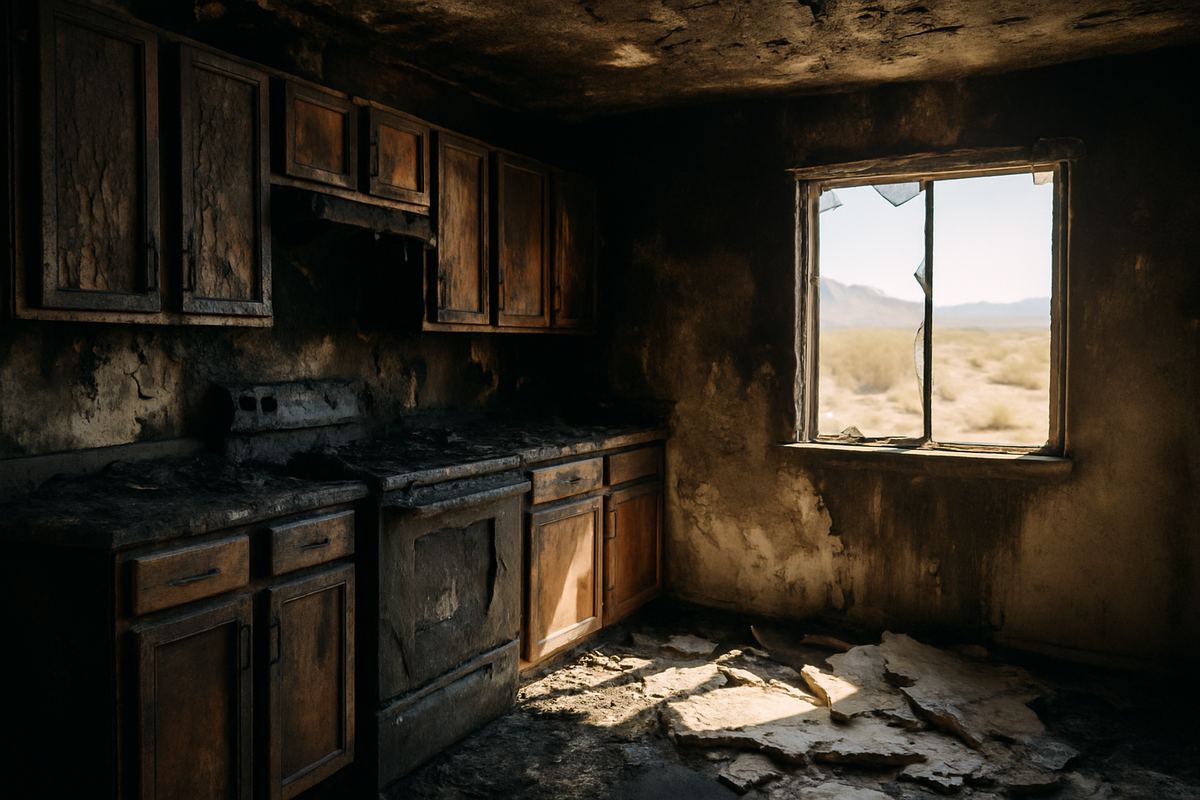
Smoke and soot travel farther than flames
Smoke moves through return-air vents, attic space and wall cavities. Rooms that never saw a flame can carry soot on ceilings, odor in carpet and pad, and residue inside the duct system. In a typical valley tract home, where one air handler serves the whole house, the HVAC system often needs evaluation even when the fire was contained to a kitchen or garage.
Water from the fight itself
Fire crews put out fires with water, and that water soaks drywall, insulation, cabinets and flooring. If the house sat closed up in summer heat afterward, moisture problems can follow. That overlap is common enough that our page on water-damaged and moldy houses covers the same ground from the other side. Roof sections cut open for ventilation add another layer, which ties into what we describe on the failing roofs and worn-out systems page.
Where the insurance claim stands changes the conversation
We are not part of your insurance claim and we do not advise on it. The questions that matter for a sale are simple: is there a claim, what stage is it in, and who is the payee on any money that has been or will be issued. Your insurance adjuster is the person to ask about coverage. Some owners also hire a licensed public adjuster to represent them on the claim, and an attorney can review a disputed or denied claim.
If the claim is still open
An open claim does not stop a sale, but it does need to be addressed in writing. Owners sometimes keep the right to pursue the claim, and sometimes the arrangement is different. Check with your adjuster and, if the policy language is unclear, an attorney before you sign anything, ours included.
If the check already came or the claim was denied
Insurance payments on a mortgaged house are often issued to both the owner and the lender. If you already received funds and chose not to rebuild, or the claim was denied, the house can still be sold as-is. We simply need to understand the payoff on any loan so the closing numbers are accurate.
Bad Shape? Send It Anyway.
Burnt, flooded, cracked or packed to the ceiling, we still want to hear about it. Give us the address and the short version of what's wrong, and we'll come look before we put a number in writing.
If typing it out is too much, the red TALK TO ALEX button gets you a person on the phone.
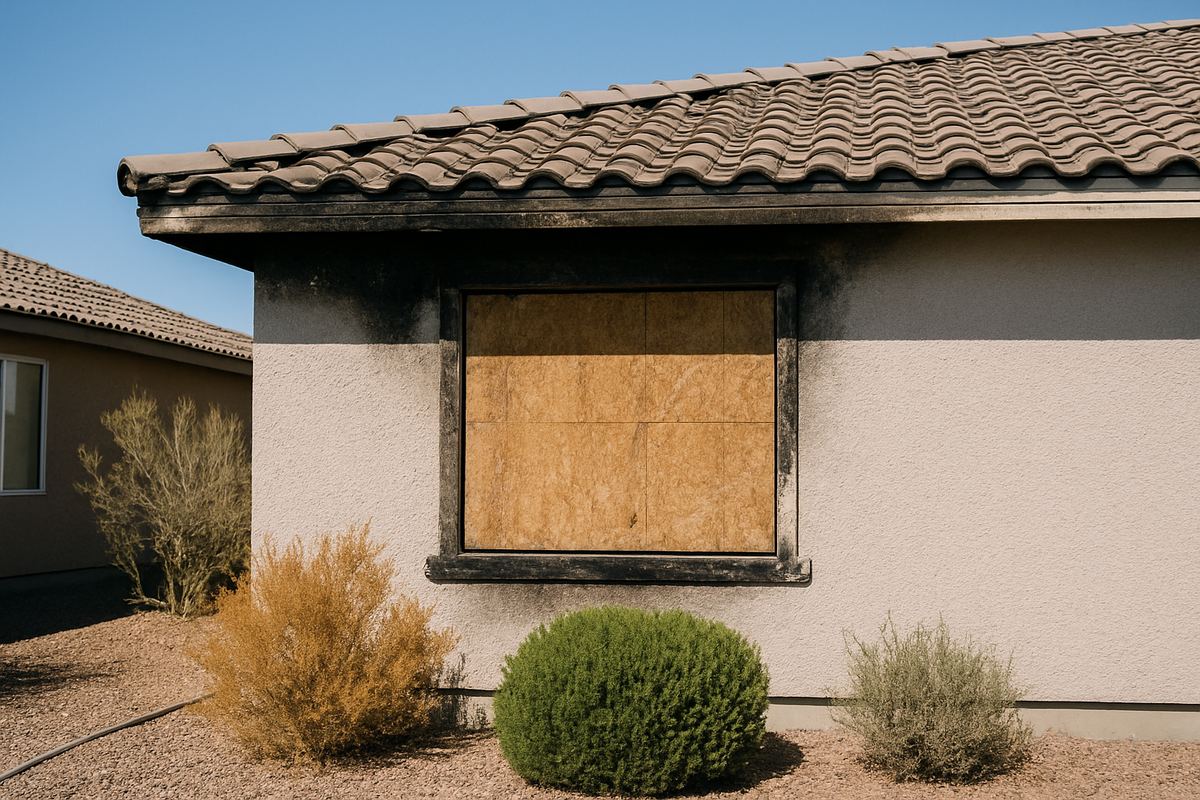
Board-up, posted notices and the building department
After a serious fire, a building official may post the structure as unsafe or restrict occupancy. People call this being red-tagged. What the notice actually requires depends on who issued it and what it says, so read it closely and call the department listed on it. In unincorporated areas such as Spring Valley and the surrounding county land, that is Clark County. Inside city limits, including North Las Vegas neighborhoods, the city's own building division handles it.
Securing the house is about vacancy, not sale price
Boarding broken windows and doors keeps out weather, scavengers and anyone looking for a place to sleep. Clark County's building code allows certain work needed to stabilize a damaged building and clear debris for inspection when the building official authorizes it, but rules vary by jurisdiction, so confirm with the department before hiring anyone. A vacant burned house that sits too long can pick up a second set of problems, which is why we also buy vandalized and squatter-damaged homes.
Rebuilding or selling: the decision owners face
After the shock wears off, most owners end up weighing the same question. Rebuilding means choosing a contractor, pulling permits, living somewhere else for the duration and managing the insurance money as it is released. For some families that is the right path, especially when the house has been in the family for years or the damage is limited.
Others decide the time, stress and uncertainty are not worth it. Maybe the house was a rental, an inherited property in another owner's name, or a home they were already planning to leave. Selling as-is lets you hand off the rebuild, the debris and the permit process to a buyer who expects it. There is no wrong answer, and nothing about talking to us commits you to selling. A conversation with your adjuster about what the policy pays under each path is worth having before you decide.
How a cash sale works on a fire-damaged house
- Tell us what happened and when. The date of the fire, where it started, and whether anyone has been inside since are enough to start.
- Share where the insurance claim stands. Open, paid, denied or never filed all work. We just need to know.
- Walk the property with us, or let us walk it. If the house is posted unsafe, we follow whatever access limits are on the notice.
- Get a written as-is cash offer. No cleanup, no debris removal and no repairs are required first.
- Set the closing date. Line it up with the claim timeline, your housing and your lender payoff.
The full sequence, including title and escrow, is laid out on our step-by-step selling process page.
Disclosure still applies when you sell as-is
Buying as-is means we do not ask you to fix anything. It does not erase Nevada's seller disclosure rules. Nevada law generally requires residential sellers to fill out a disclosure form covering the conditions they know about before the sale closes, with some exceptions. A past fire, smoke damage and any repairs that were or were not permitted are the kind of things that belong on it. We are not lawyers, and this is not legal advice. If you have questions about your own situation, a Nevada real estate attorney can answer them. Common questions about paperwork and timing are collected in our answers for as-is sellers.
Fire damage is one of several conditions we buy. The full list sits on our overview of house problems we buy, and when you are ready to share details, the property information form is the place to start.
Common Questions About This
Can I sell a house that has been posted unsafe after a fire?
In many cases, yes. A posted notice limits use and entry; it does not by itself stop a property from changing hands. What it requires depends on the jurisdiction that issued it and its exact wording. Read the notice carefully and contact the building department named on it. We work within whatever access limits apply and buy the house in the condition it is in.
Do I have to finish my insurance claim before selling?
No. Owners sell with claims open, settled or denied. How the claim is handled after the sale should be spelled out in writing, and your insurance adjuster or an attorney is the right person to explain how a sale affects your particular policy. We do not give insurance or legal advice, and nobody here will push you toward signing before you have asked.
Do I need to clean out the house or remove burned debris?
No. Take what you want to keep, as long as entry is safe and allowed, and leave the rest. Burned furniture, soot-covered belongings and debris stay with the house. We plan for removal and cleanup as part of buying it, so you do not need to hire anyone before closing.
After a fire, do I still owe the buyer a seller disclosure form?
Usually, yes. Nevada generally requires sellers of residential property to disclose known conditions on a state form before closing, and an as-is sale does not automatically remove that duty. There are exceptions in the law. For your own sale, ask a Nevada real estate attorney how those rules apply after a fire.