Foundation and Slab Problems Don't Have to Stop a Sale
Few words end a traditional sale faster than "structural." When an inspector flags the foundation, lenders and buyers often stop and ask for an engineer. We buy the house without waiting for that answer.
- Any condition
- No repairs or clean-out
- Open insurance claims OK
- No agent commission
- Close when you choose
Why valley soils can move a house
Ground conditions in the Las Vegas valley are not uniform. Geologists and the local building codes call out several soil problems builders have to plan around, and older homes were not always built with today's testing and design.
Expansive clay soils
Some soils in the valley contain clays that swell when wet and shrink as they dry. Studies of the valley describe these clays as more common and more severe in parts of the north and east valley. That is one reason we often hear about cracked slabs from owners in North Las Vegas as well as on the East Las Vegas side, though movement can happen anywhere the ground gets wet unevenly. Leaking irrigation, poor drainage next to the house and plumbing leaks under the slab can all feed it.
Caliche and uneven support
Caliche is a natural layer of soil cemented by calcium carbonate. Its thickness and hardness change from one spot to the next. A continuous caliche layer can actually support a foundation well. Trouble tends to come when part of a foundation rests on caliche and part rests on softer soil, which can lead to uneven settlement. Clark County's building code requires soil investigations and foundation recommendations to address expansive soils and caliche for new construction.
None of this means a house in a particular neighborhood will have problems, or that a house elsewhere is immune. Soil conditions vary lot by lot, and only testing and a professional evaluation can say what is happening under a specific home.
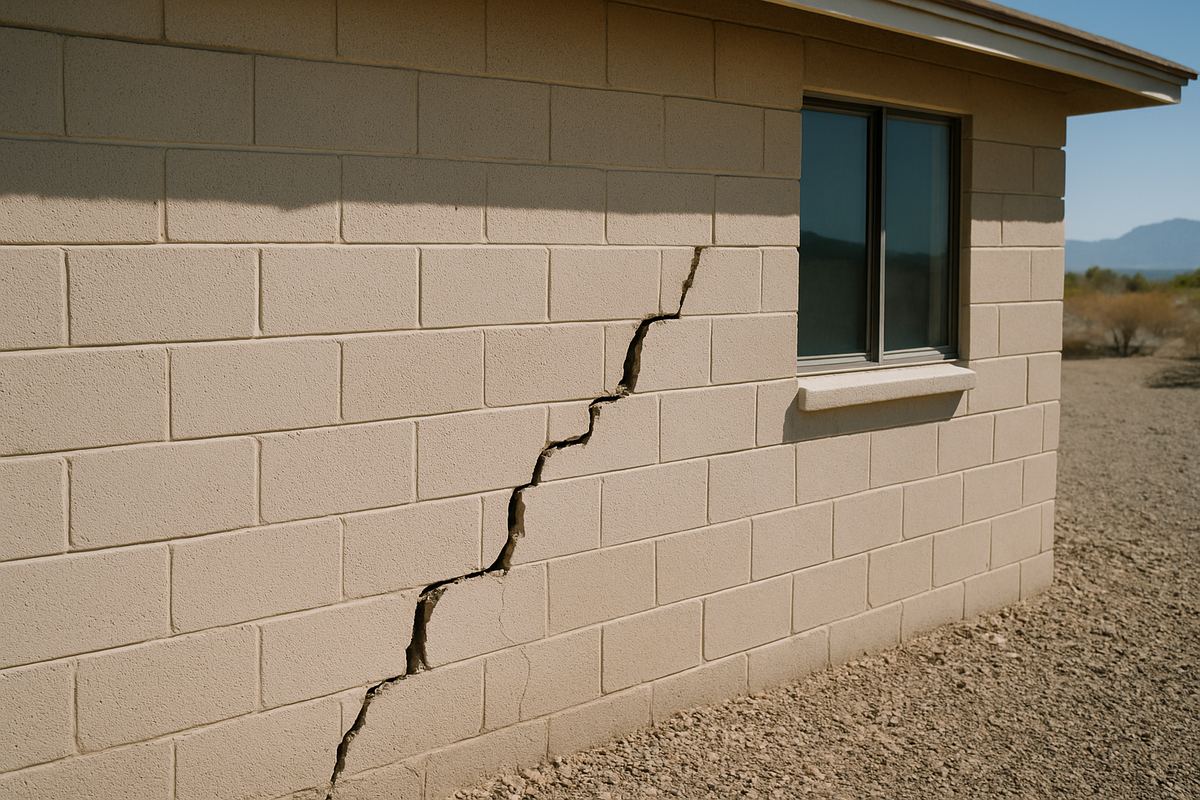
Signs owners and inspectors notice
- Diagonal or stair-step cracks in block walls or stucco, often starting at window and door corners
- Interior doors that stick, swing open on their own or will not latch
- Cracked floor tile in a line, or floors that feel out of level
- Gaps between walls and ceilings, or baseboards pulling away
- Exterior concrete, patios or block walls separating from the house
Not every crack is structural. Concrete shrinks as it cures, and hairline slab cracks are common. Deciding which cracks matter is a job for a professional, not a buyer or a website.
Bad Shape? Send It Anyway.
Burnt, flooded, cracked or packed to the ceiling, we still want to hear about it. Give us the address and the short version of what's wrong, and we'll come look before we put a number in writing.
If typing it out is too much, the red TALK TO ALEX button gets you a person on the phone.
Water, drainage and the ground under the house
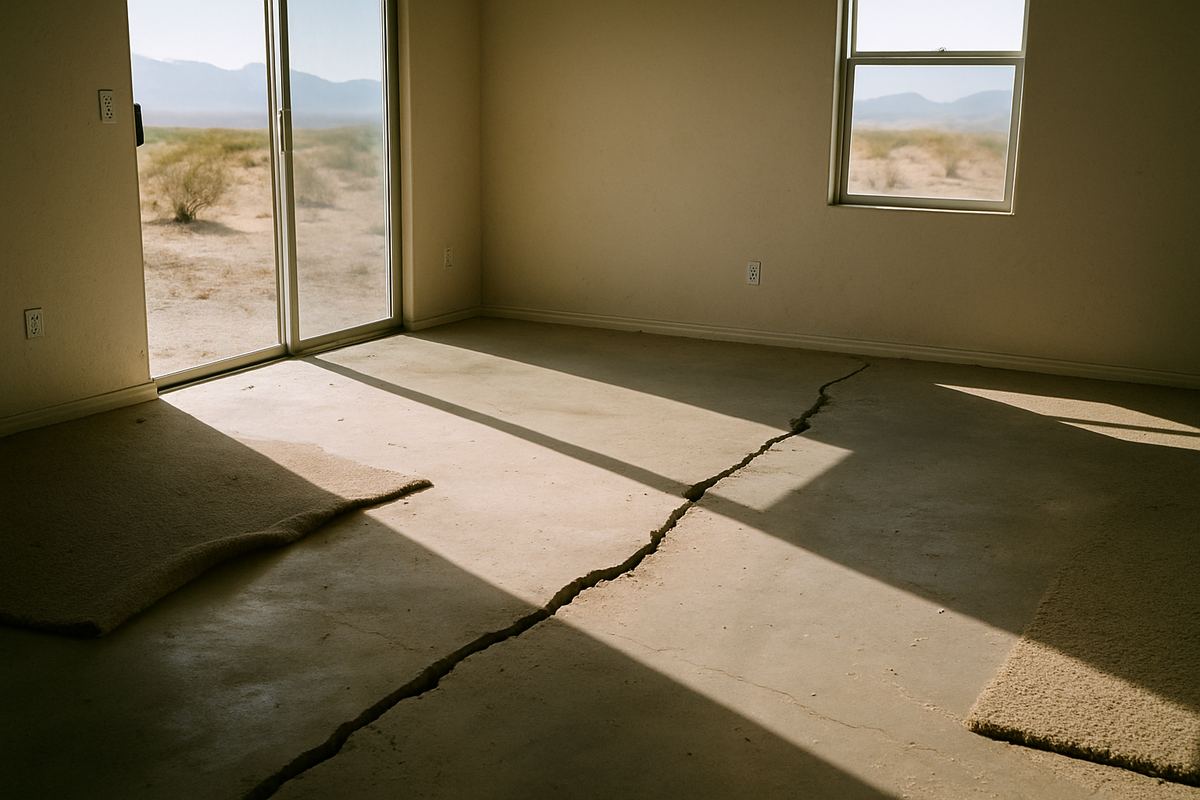
In a desert, it can seem strange that water is behind so many foundation problems, but moisture changes are what make expansive soils move. A house that has sat in the same dry ground for years can shift when that ground starts getting wet in one place and not another.
Common moisture sources around valley homes
- Drip irrigation or sprinkler lines that leak next to the foundation
- Downspouts and roof runoff that empty against the house instead of away from it
- Yards graded so that storm water pools near the walls during monsoon season
- Supply or drain lines leaking beneath the slab
- Pools and spas with leaks that wet the surrounding soil
A structural engineer or a geotechnical engineer is the professional who can say whether moisture is driving the movement in a particular house. If you plan to keep the home, fixing the water source is often part of the answer. If you plan to sell to us, you can leave it as it is.
When a structural engineer gets involved
In a traditional sale, a home inspector who sees signs of movement will usually recommend evaluation by a licensed structural engineer. The engineer looks at the pattern of damage, may take floor-level measurements, and writes a report that says whether the house is moving and what kind of repair, if any, is appropriate. Lenders and buyers often want that report before they will continue.
Where the sale usually stalls
A report that recommends repair often turns into competing contractor bids, a renegotiation, or a buyer who walks away. An appraiser may also note the condition, which can affect financing. Each of those steps takes time, and the house still is not sold.
What changes with an as-is buyer
We buy without requiring an engineer's report, repair bids or a foundation contractor's warranty. If you already have a report, sharing it is helpful, and we take it into account. If you do not, there is no need to order one for us. The steps are below, and more detail is on our how our cash purchase works page.
Selling a house with a foundation problem, step by step
- Describe what you have seen. Cracks, sticking doors, a past inspection note or an old engineer's letter all help.
- Tell us about water near the house. Irrigation leaks, pooling after storms or a known slab leak can be part of the story.
- Schedule a walk-through. We look at the house as it is. No one needs to patch cracks or repaint first.
- Receive a written as-is offer and pick your closing date.
Related problems and disclosure
Foundation movement often travels with other issues. A slab leak can wet the soil beneath the house, which is why our page on leaks, flooding and mold overlaps with this one. Movement can also crack stucco and open gaps that let water into walls and the roof structure, covered on our page about roofs, plumbing and electrical systems.
If you know about foundation problems, Nevada's seller disclosure form generally asks about them, and selling as-is does not by itself remove that duty. Ask a Nevada real estate attorney how those disclosure rules apply to your slab problems. General questions about paperwork are answered on our as-is seller questions page, and the full set of conditions we buy is on the house problems overview.
Common Questions About This
Do I need a structural engineer's report before selling to you?
No. We buy houses with suspected or confirmed foundation movement without asking you to hire an engineer. If you already have a report from a past inspection or sale attempt, we are glad to read it, and it helps us understand the house. If you do not have one, there is nothing you need to order.
A previous buyer backed out over the foundation. Can I still sell?
Yes. That happens often with foundation findings, especially when the buyer needs a loan. Tell us what the inspection or report said. If you learned about a defect during that failed sale, it is the kind of thing that generally belongs on Nevada's seller disclosure form, and an attorney can explain your obligations.
Is every crack a foundation problem?
No. Concrete shrinks as it cures, and hairline cracks in slabs and stucco are common in valley homes. Patterns such as stair-step cracks in block, doors that stop latching or floors that slope are the signs that usually prompt an inspector to recommend a structural engineer. Only a qualified professional can say what is structural.