Hoarder Houses and Heavy Clean-Outs, Bought As They Are
Whether the house belongs to you, a parent, or someone who has passed away, a home packed with belongings is hard to face. You do not have to empty it to sell it.
- Any condition
- No repairs or clean-out
- Open insurance claims OK
- No agent commission
- Close when you choose
A family situation before it is a property problem
Most calls about hoarder houses do not come from the person who filled the house. They come from adult children, siblings, executors or a landlord, and the conversation is usually tangled up with grief, guilt or a hard family history. We do not need the story, and we do not judge it. We need to know who owns the house and who has authority to sell it.
If the owner is living
A person who is still living in the home may not be ready to leave, and pressure rarely helps. If a family member is helping an aging parent, the owner, or someone with valid legal authority such as a power of attorney, has to agree to the sale. An elder-law or real estate attorney can explain what authority is needed.
If the owner has passed away
When the owner has died, the person who can sign is usually determined through probate, a trust or another legal process. That can take time. We can talk while that is being sorted out, and we will not ask anyone to sign before they have the authority to do so.
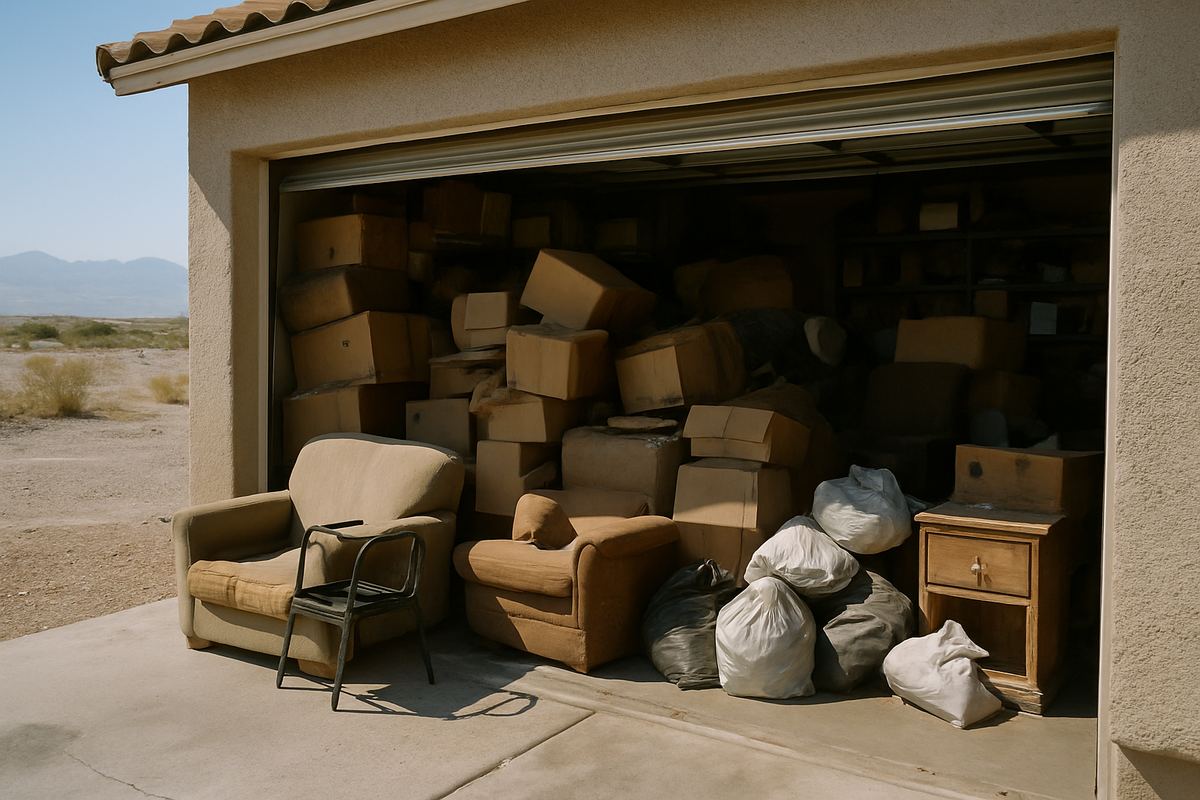
What a heavy clean-out usually involves
Clearing a packed house is physical, emotional and slow. It often reveals problems that were hidden under the contents: leaks that went unreported, damaged floors, pests, broken fixtures or systems that stopped working years ago.
Biohazard basics
Some houses contain animal waste, spoiled food, sharps, mold or other material that can carry health risks. Those conditions call for a trained biohazard or trauma-cleaning company with proper protective equipment, not a weekend with friends and a rented dumpster. If anything in the house raises a safety concern, stay out and call a professional. We never ask sellers to handle any of it.
Finding what matters before you go
Families often want to search for documents, photos, jewelry or keepsakes before letting the rest go. Take the time you need for that, as long as the house is safe to enter. Everything you leave behind becomes our job after closing.
Pests are another common discovery. Rodents and insects thrive where contents are dense and cleaning is hard, and some infestations damage wiring, insulation and stored belongings. A licensed pest control company can address an active problem if family members need to spend time in the house sorting through things. For our purchase, an infestation is simply part of the condition we plan around. The same goes for appliances that stopped working, toilets that do not flush and rooms that have not been reachable in years. You do not need to tell us everything is fine. You only need to tell us what you know.
Bad Shape? Send It Anyway.
Burnt, flooded, cracked or packed to the ceiling, we still want to hear about it. Give us the address and the short version of what's wrong, and we'll come look before we put a number in writing.
If typing it out is too much, the red TALK TO ALEX button gets you a person on the phone.
Why a full house is hard to sell the usual way
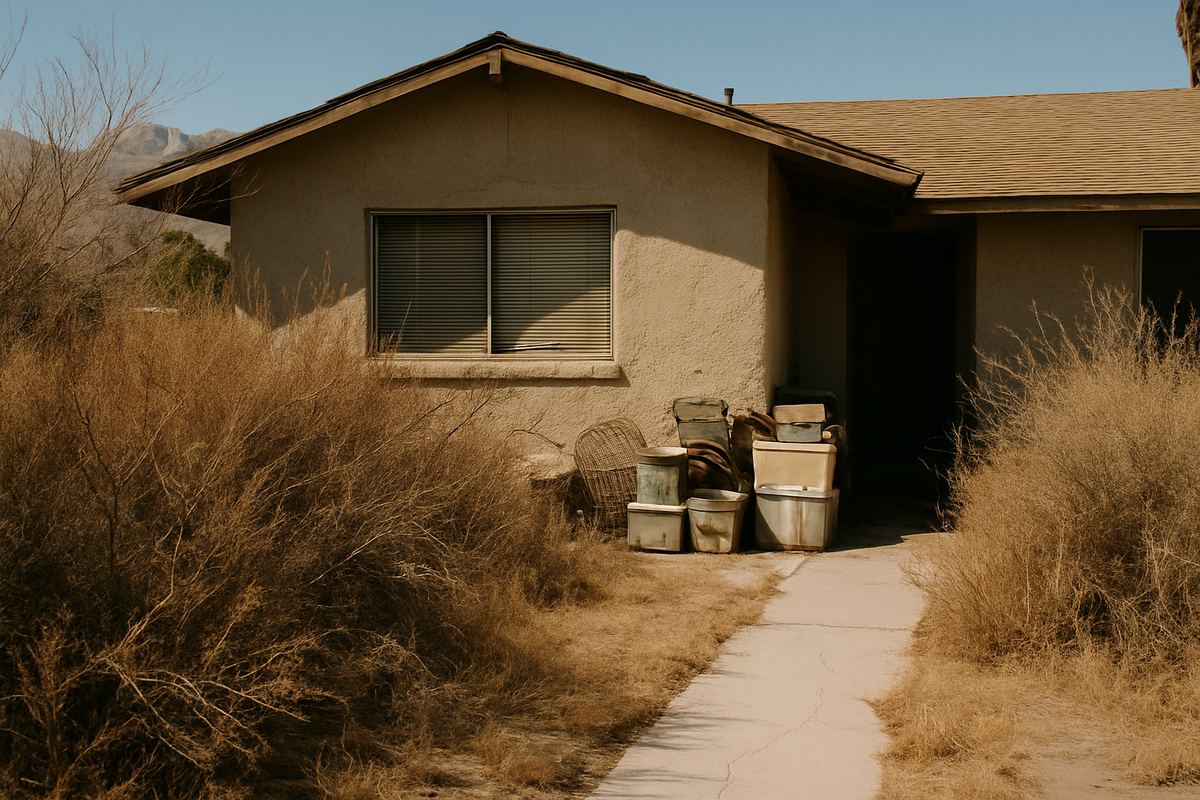
A traditional sale starts with showing the house. Agents need photos, buyers need to walk through every room and inspectors need to reach the electrical panel, water heater, attic and crawl spaces. When contents block all of that, the house usually has to be emptied first, and the clean-out often costs more time and energy than families expect.
Clean-out before the clean-out
Families often discover the work comes in waves. First the sorting of what to keep, then hauling, then cleaning, then the repairs that the contents had been hiding. Each wave can surface new decisions, and siblings do not always agree on them. Meanwhile utilities, insurance, property taxes and HOA dues keep coming for a house no one is living in.
Selling to a cash buyer as-is lets the family stop after the first wave. Pull out the documents and keepsakes that matter, and leave the rest for us to deal with after closing. If the estate needs time for probate or a trust to settle, the closing date can be set to match.
How selling a full house works
- Tell us who owns the house and who can sign. If that is still being worked out, say so.
- Let us see what we can. A partial walk-through is fine. Photos work if parts of the house are blocked.
- Remove the items you want to keep. Paperwork, heirlooms and personal photos first. Nothing else needs to be sorted.
- Review the written offer and choose a closing date. You can set the date around probate, family travel or a move.
Escrow, title and the timeline are explained in more detail on our as-is sale process page.
Problems that often come with a packed house
Heavy contents make maintenance nearly impossible, so a hoarder house often has more than one issue. Plumbing leaks may have run for years behind stacked boxes, which is the territory of our water damage and mold page. Additions, enclosed patios or garage rooms built without permits are also common in long-held homes, covered under code violations and unpermitted work. Exterior clutter and an overgrown yard can draw neighbor complaints and code enforcement attention, too.
Under Nevada's seller disclosure rules, known conditions generally need to be disclosed even in an as-is sale, though the law has exceptions, including some that may apply to certain estate situations. Ask a Nevada attorney how the rules apply to you. Our common questions from as-is sellers cover the basics.
Neighborhoods and discretion
We buy full houses in long-established areas like central Las Vegas and newer communities such as Enterprise. We do not put signs in the yard and we do not talk to neighbors about your family. Other conditions we purchase are listed on our overview of problem properties.
Common Questions About This
Do I have to empty the house before selling?
No. Pull out whatever you want to keep; the rest can stay. Furniture, boxes, trash, vehicles that do not run and everything in the garage can stay. Clearing the house after closing is built into the offer we make, so there is no need to bring in a junk hauler or cleaning crew first.
Can I sell my parent's hoarder house for them?
Only someone with legal authority can sign. That is the owner, or a person holding valid authority, such as an agent acting under a power of attorney, a trustee or a court-appointed representative. An elder-law or probate attorney can explain which applies. We are happy to talk with family members while that is being worked out.
What if there are biohazards in the house?
Do not try to clean them yourself. Animal waste, sharps, spoiled food and heavy mold can carry real health risks and are best handled by a trained biohazard cleaning company. For a sale to us, you do not need to arrange any cleanup. Let us know what you are aware of so anyone entering can take the right precautions.
Will anyone know we are selling?
We do not place signs, list the house publicly or contact neighbors. Like any sale, the deed is recorded with the county after closing, which is public record. Beyond that, the details of your family's situation stay between you, us and the escrow and title companies handling the closing.