Selling a House As-Is in the City of Las Vegas
Some of the oldest tract houses in the valley stand inside the City of Las Vegas. Age brings its own list of problems, and the city has its own offices for code and permits.
- Any condition
- No repairs or clean-out
- Open insurance claims OK
- No agent commission
- Close when you choose
Where the Valley's Tract Housing Started
The city holds the valley's earliest subdivisions. Huntridge, east of downtown along Charleston Boulevard, was built between 1941 and 1944 for defense workers and is generally described as the first tract subdivision in Las Vegas. Its houses came in a handful of plans, wood frame on concrete slabs, in minimal traditional and early ranch styles. Nearby, the John S. Park neighborhood is a designated historic district, and the Scotch 80s west of Interstate 15 began as a planned community in the 1950s.
Wartime and postwar frame houses
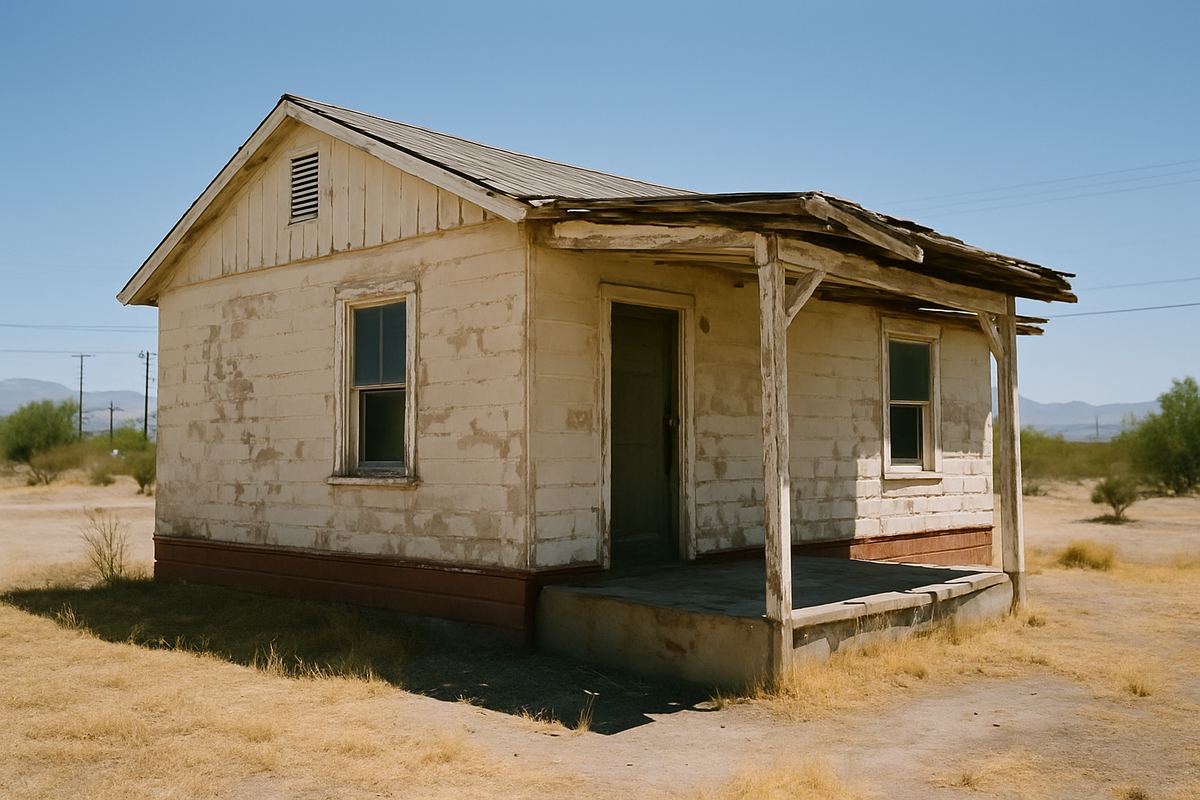
Houses from the 1940s and 1950s were built with materials and methods that have now outlived several owners. Original drain lines, undersized electrical service and roofs that have been patched rather than replaced are common findings. Many have had rooms added or garages enclosed over the decades, not always with a permit.
Mid-century ranches and block homes
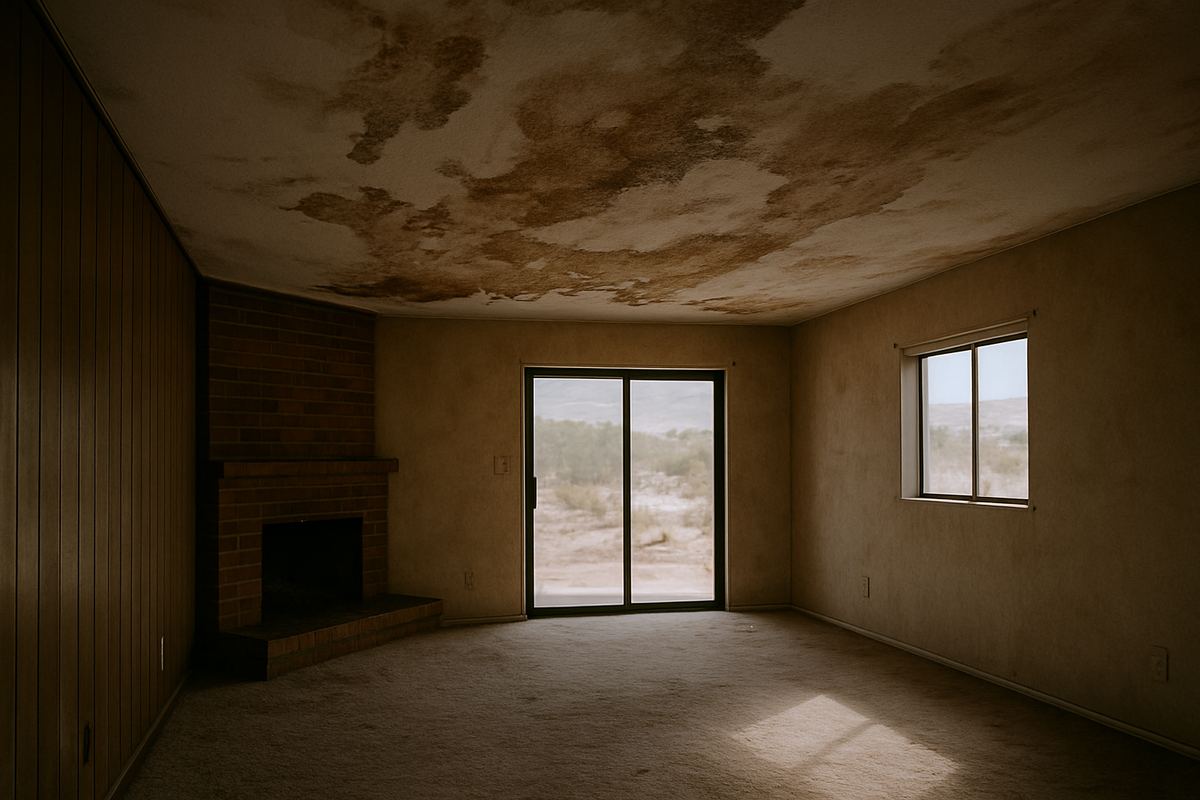
Through the 1950s and 1960s, builders spread out from downtown with single-story ranches, some framed and some in concrete block. Low-slope roofs from that period tend to pond water and leak at flashings, and the problems often show up as stained ceilings long before anyone climbs a ladder. Our page on failing roofs and outdated plumbing and wiring goes deeper on what buyers' inspectors flag.
Newer tracts toward the northwest
The city also stretches northwest into stucco tract neighborhoods built during the later growth years. Those houses have different weak points: original air conditioning equipment, water heaters at the end of their life and HOA rules that keep pressure on the exterior. A house in that part of the city can look tidy from the street while the attic ductwork, the water heater and the roof underlayment are all due at once.
Soil Under the City
Geotechnical engineers working in Southern Nevada describe several soil conditions that affect slabs. Earth fissures linked to groundwater withdrawal are generally found in the middle to north portion of the valley, and caliche, a cemented layer that can be very hard, is common across the region. A slab sitting partly on caliche and partly on softer soil can settle unevenly. If you are seeing stair-step cracks in block or doors that no longer latch, the guide to slab cracks and settling foundations explains when an engineer usually gets involved.
Bad Shape? Send It Anyway.
Burnt, flooded, cracked or packed to the ceiling, we still want to hear about it. Give us the address and the short version of what's wrong, and we'll come look before we put a number in writing.
If typing it out is too much, the red TALK TO ALEX button gets you a person on the phone.
City Hall, Not the County, Holds the File
Many addresses that read Las Vegas are actually in unincorporated Clark County, so it is worth confirming. Inside city limits, property maintenance complaints go to the City of Las Vegas Code Enforcement Division, and permits come from the city's Department of Building and Safety. The city publishes how its Las Vegas code enforcement process works for residents.
When a violation notice is already open
An open case does not automatically stop a sale, but it should be disclosed and the buyer has to be willing to take it on. Our notes on unpermitted additions and open code cases cover how that usually plays out. This is general information, not legal advice.
Selling Without Touching the Repairs
We buy city houses in the condition they are in, including fire-damaged properties and houses that need a full clean-out. Selling straight to us means no listing agent's commission comes out of the proceeds, and you decide when the problem house closes. If the house turns out to be across the line in the county, nothing changes on our side. Inherited houses near downtown are a frequent case: a family member has lived there for decades, the systems are original, and nobody in the family wants to manage a renovation from out of state.
Neighboring areas
The city borders North Las Vegas and its older ranch neighborhoods to the north, the east-side neighborhoods toward Frenchman Mountain, and Spring Valley west of the Strip. The full list is on our Las Vegas Valley service area overview.
Common Questions About This
My house is in Huntridge. Does historic status affect selling it as-is?
Being in an older neighborhood does not prevent an as-is sale. Individual properties listed on a local historic register may have review requirements for certain exterior changes, which matters to whoever renovates the house afterward. If you are unsure whether your property carries any designation, the City of Las Vegas historic preservation staff can tell you.
Will an old garage conversion without a permit stop the sale?
Usually not for a cash buyer who expects it. Nevada sellers generally still have to disclose known conditions, and a lender-backed buyer may run into appraisal or insurance trouble with unpermitted space. We take on houses with that kind of history and factor the eventual permitting or removal into our offer.
How do I confirm my property is inside city limits?
Check the taxing district on your property tax bill or look up the parcel on the Clark County Assessor's site. Code enforcement notices also carry the issuing government's name. City and county processes are similar in spirit but run through different offices and codes.
Do you buy houses with original 1950s plumbing and wiring?
Yes. Aging drain lines, older electrical panels and dated heating and cooling equipment are among the most common reasons owners of mid-century houses contact us. You do not need to replace anything or get estimates first. If you already have an inspection report or contractor bids, sharing them helps us understand the house, but they are not required.