Las Vegas
Wartime frame houses, mid-century ranches and boom-era tracts inside the city limits, and what to expect when one of them needs more than you can fix.
The valley's houses were built in waves, and each wave tends to fail in its own way. Here is how the six areas we cover differ, and who to call at city hall or the county about each one.
A house in the Las Vegas Valley carries the habits of the decade it was framed. Wartime and postwar subdivisions near downtown were small wood-frame and block ranches on slabs. The east side filled in from the 1950s through the 1980s, mixing ranch houses with manufactured-home parks. The southwest and the far reaches of Henderson came later, in stucco tract homes and guard-gated master plans. When an owner tells us what is wrong with a property, the neighborhood and the build year usually explain a lot of it before anyone walks through the door.
Jurisdiction matters just as much. Three incorporated cities and a set of unincorporated towns run by Clark County share the valley, and each one has its own code enforcement office and its own building permit counter. A mailing address that says Las Vegas does not always mean the City of Las Vegas is the authority. Knowing which office holds the file on a property is one of the first things we check.
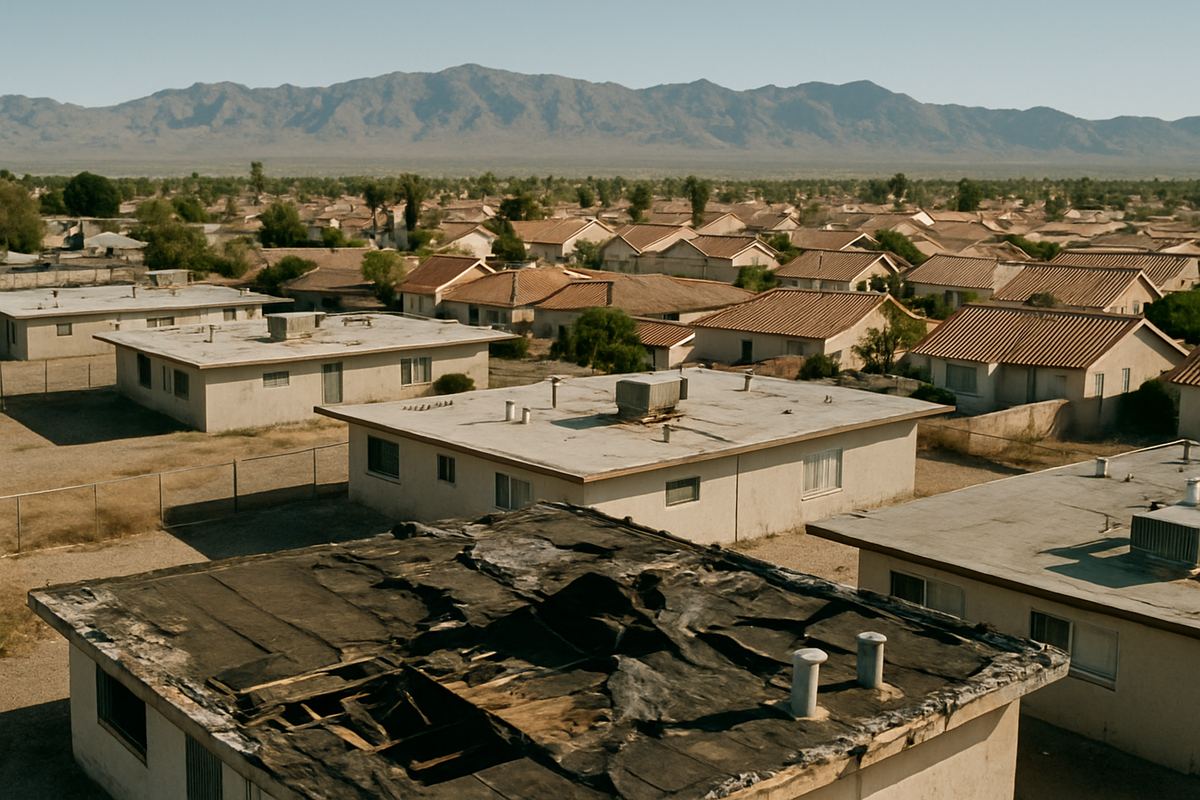
Wartime frame houses, mid-century ranches and boom-era tracts inside the city limits, and what to expect when one of them needs more than you can fix.
From 1950s ranches south of Craig Road to Aliante's newer streets, how North Las Vegas houses wear out and who enforces the code there.
Sunrise Manor, Whitney and the Boulder Highway corridor: ranch homes and manufactured housing from the 1950s onward, mostly under county jurisdiction.
Henderson's housing spans the wartime townsite, Green Valley's early master plan and newer hillside communities, each with its own typical repair list.
Tract homes west of the Strip built from the 1970s through the 1990s, many now due for new pipes, roofs and cooling all at once.
Southwest valley homes from Southern Highlands to Mountain's Edge, now old enough for original roofs, AC and plumbing to start giving out.
Inside the city limits sit some of the oldest tract houses in the valley, beginning with the Huntridge subdivision of the early 1940s. Our page on selling an older house inside Las Vegas city limits covers wood-frame wartime homes, mid-century ranches and how the city handles code complaints.
Incorporated in 1946, this city has a core of modest 1950s and 1960s ranches and a newer north end built around Aliante. The North Las Vegas guide to clay soils and older ranch homes explains why slab and block-wall cracking come up so often there.
East Las Vegas is mostly an informal name for the side of the valley that runs from downtown toward Frenchman Mountain, much of it unincorporated Sunrise Manor and Whitney. The east-side page on Boulder Highway ranches and manufactured homes walks through who has jurisdiction where.
Henderson began as a company town for a wartime magnesium plant and later became home to the first master-planned community in Southern Nevada. Read about Henderson houses from the old townsite to Green Valley and the problems each era tends to develop.
This unincorporated town west of the Strip grew from a 1970s tract on the site of a former racetrack. Our Spring Valley notes on 1970s to 1990s tract homes spend time on plumbing from that period.
The southwest corner of the valley is the newest of the six, shaped by Southern Highlands, Mountain's Edge and the 215 Beltway. The Enterprise page on newer stucco homes and HOA pressure covers what goes wrong in houses that are only a couple of decades old.
Burnt, flooded, cracked or packed to the ceiling, we still want to hear about it. Give us the address and the short version of what's wrong, and we'll come look before we put a number in writing.
If typing it out is too much, the red TALK TO ALEX button gets you a person on the phone.
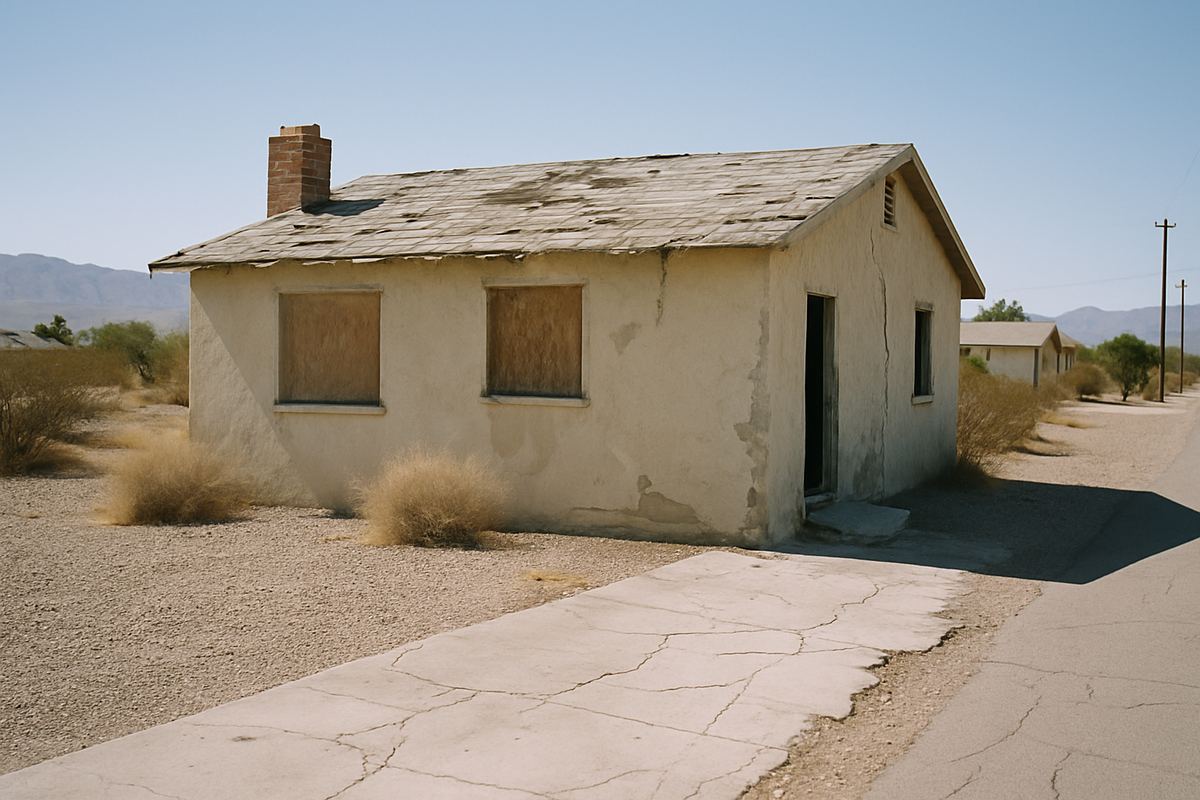
Some trouble ignores neighborhood lines. Slab leaks, roof failure and kitchen fires happen in a 1955 ranch and a 2005 two-story alike. So do houses packed floor to ceiling after years of collecting, and vacant properties that someone broke into. Our overview of the house problems we buy without repairs lists each condition with its own page, so you can read about the situation you are in rather than a generic pitch.
What changes from area to area is the backdrop: which soils sit under the slab, which office writes the violation notices, whether an HOA is involved, and what kind of materials were in fashion when the house went up. That context is what each area page is for.
We focus on these six parts of the valley, but the boundaries between them are not always obvious on the ground. If your property sits near an edge, or in a pocket of unincorporated county land surrounded by a city, tell us the address and we will say plainly whether it is a fit. Nothing about that conversation commits you to anything, and the steps are laid out on the page explaining how a direct as-is sale works.
Your mailing address is not a reliable guide, because much of the area addressed as Las Vegas is actually unincorporated county land. The taxing district appears on your property tax bill and in the parcel records kept by the Clark County Assessor. If code enforcement has contacted you, the letterhead on the notice also tells you which government is involved.
We look at houses throughout Las Vegas, North Las Vegas, East Las Vegas, Henderson, Spring Valley and Enterprise, including guard-gated communities and manufactured homes on owned land. Whether a particular property works depends on its condition, title and situation rather than the neighborhood name, so the simplest step is to describe the house and let us respond.
Location is one factor among several, alongside the condition of the house, the cost of the repairs it needs and what similar properties nearby are worth once fixed. We do not use a fixed formula, and we explain the reasoning behind any number we give you so you can compare it against other options.